An AI for every doctor.
An agent for every patient.
Thane connects to your EHR and the sources you trust and learns from every interaction. Over time it works the way you practice, for your patients and your clinic.
Takes 30 seconds. Tell us your specialty and we'll scope the demo around it.
Built by clinicians and AI engineers trained at Columbia, Johns Hopkins, Yale, Mount Sinai, Georgia Tech, UT Austin, and UT Knoxville, with experience across the VA, Epic, and Cerner, and an advisory bench of practicing specialists and health system leaders. HIPAA by design. SOC 2 certified. Your data stays under your control.
How Thane works
Grounded from the first answer.
Tuned to you over time.
Any system can score an answer. Thane also learns how you practice.
The platform
One platform, six ways to use it.
Clinicians use it in the clinic, patients use it at home, the front desk uses it on the phone, practices can run it on-site, and teams can build it into their own products. All six start from the same foundation and adapt to the people using them.
Thane Edge
Edge runs Thane's clinical AI on a server inside your practice: scribe, patient messaging, chart summaries, and care plans. Thane engineers install and tune it on-site, and patient records are processed on your network.
Learn more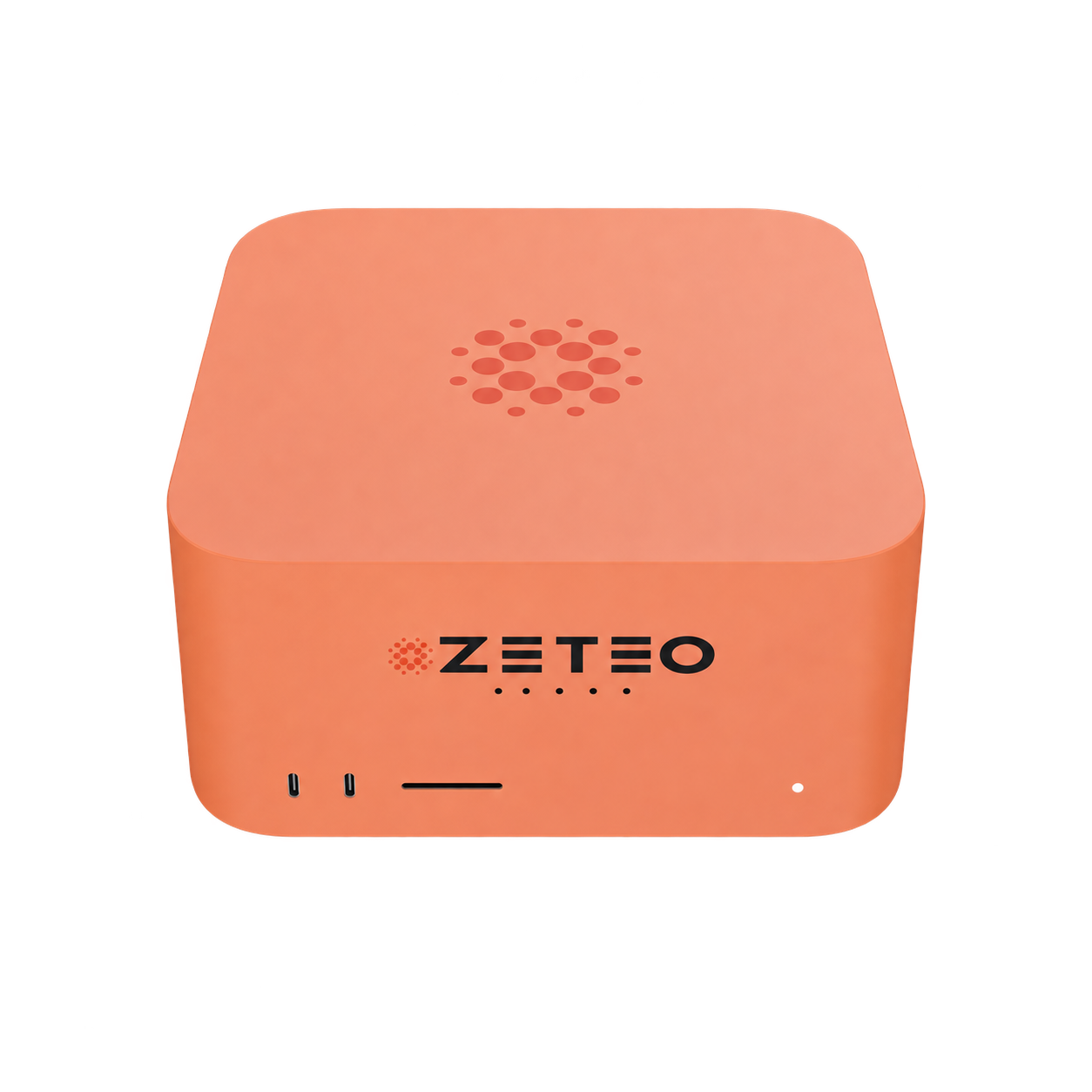
Online · installed on your network · 2 days on-site
Thane Scribe
Scribe is an app on the clinician's phone. A local model drafts the visit note from the encounter in your own template, and nothing enters the chart until you approve it. It can link with the Thane Edge box in your practice.
Learn moreThane Gateway
Gateway puts everything Thane has built behind one API: retrieval, citations, patient context, knowledge management, and a ready-to-use harness. Your team spends its time on features, and we handle the infrastructure.
Learn more{
"answer": "...",
"citations": [2, 7],
"next_questions": [...],
"confidence": "high"
}- Structured and cited. Every statement traces to its source.
- Knowledge agent included. Gaps flagged, updates proposed for review.
Thane Herald
Herald is the health agent patients carry between visits. It answers from their own records and vetted sources, turns each conversation into questions for the next appointment, keeps reminders on track, and can be tuned by their own doctor.
Learn moreThane Calls
Calls is an AI receptionist for the front desk. It answers every call on the first ring, books the visit, drafts the refill request, and hands anything clinical to your team.
Learn moreThane Navigator
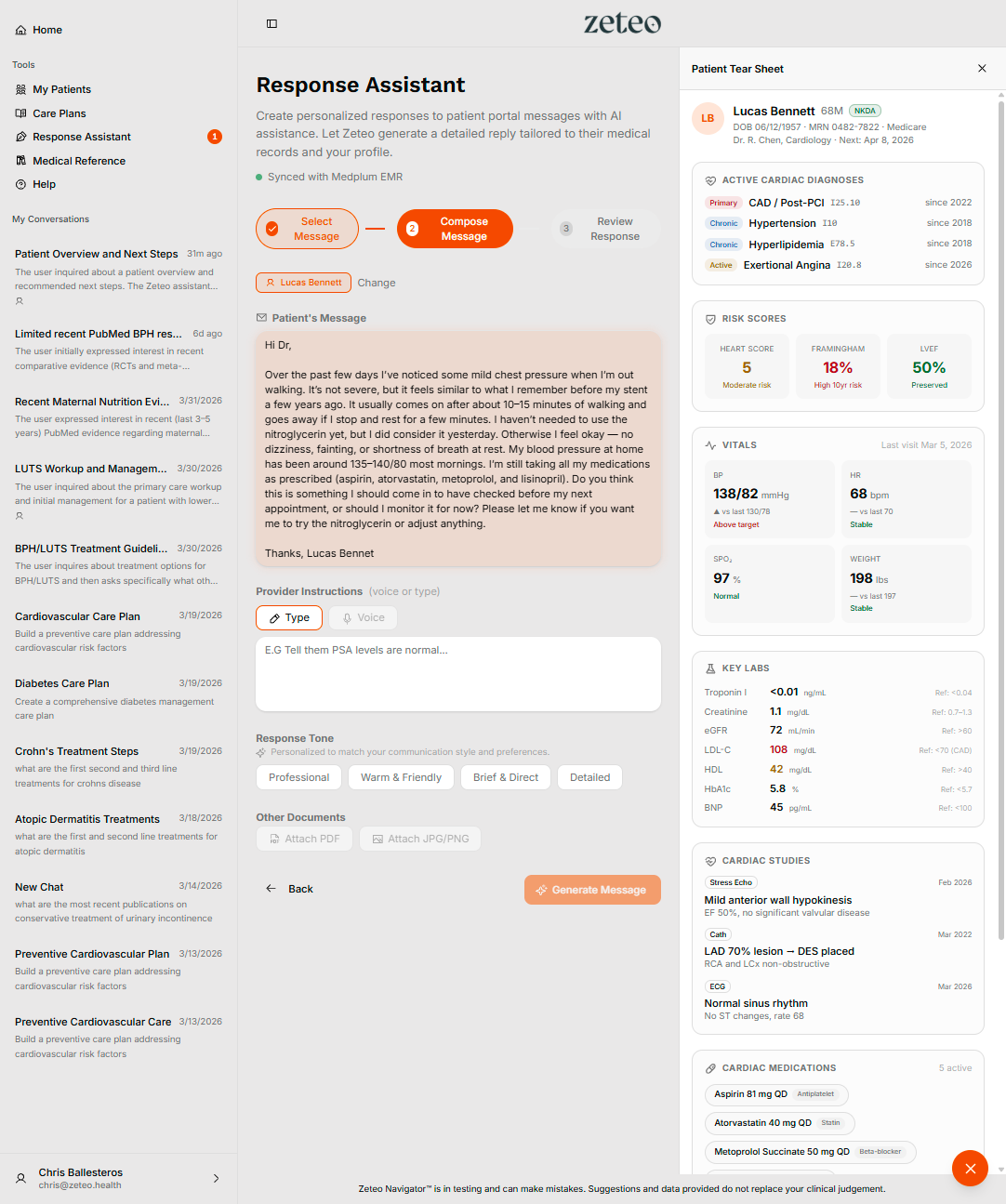
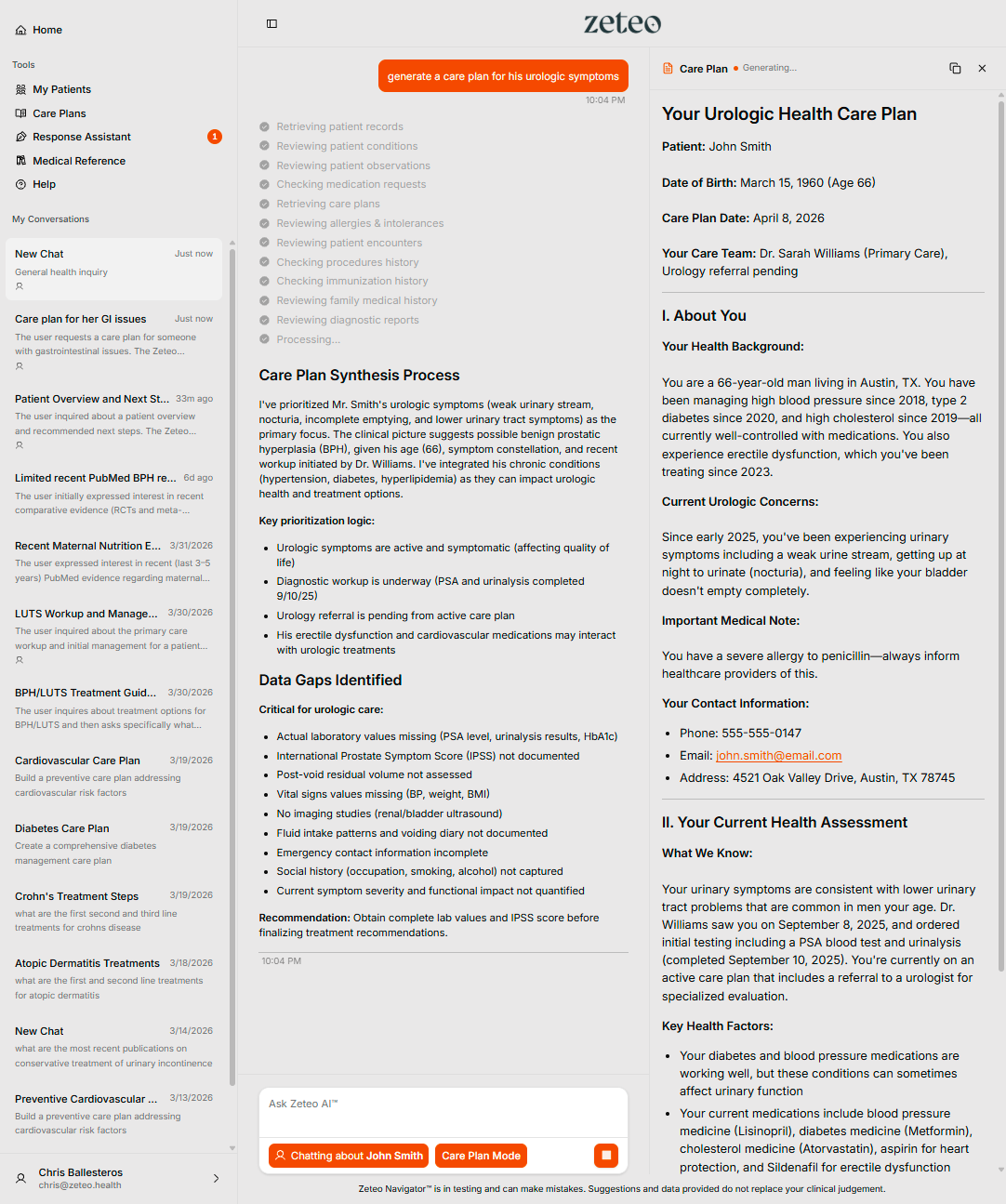
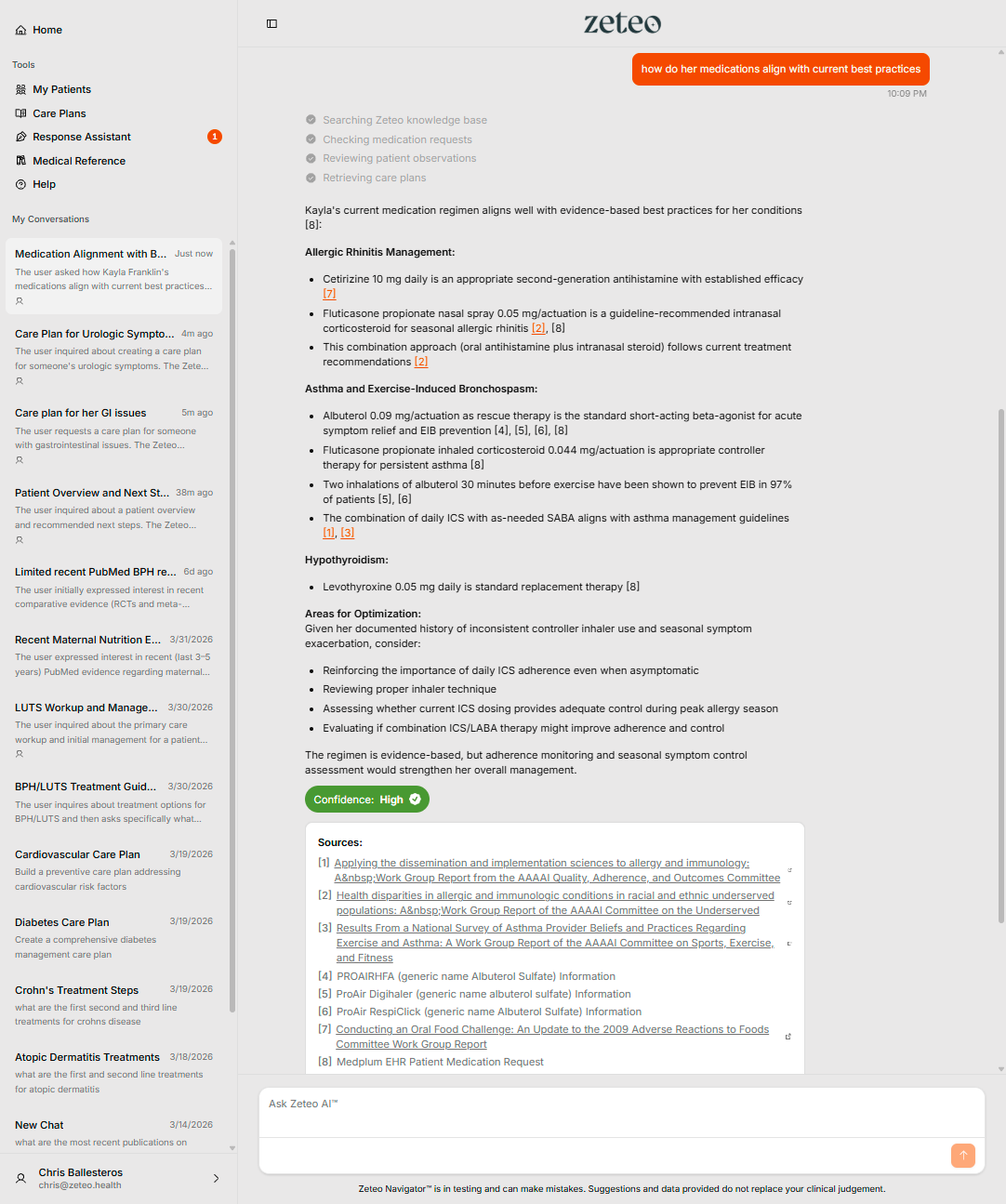
Navigator drafts the administrative work of care: patient replies, patient snapshots, care plans, and evidence reviews, built from the chart and written the way you would write them. You review, edit, and approve.
Learn moreQuestion about my new prescription
Hi Dr. Reyes, I started the new medication yesterday and I'm feeling a bit dizzy. Is that normal, or should I stop taking it?
Mild dizziness is a documented side effect in the first few days of this medication class. No other interactions were flagged. Recommend continuing and following up if it persists past day 3.
Integrations
Plug into what your practice already runs.
Epic, athenahealth, Healthie, and Medplum connections are live today. We scope additional sources with your team during pilot planning, and you keep the systems you already run.
See how integration worksFAQ
Frequently asked
questions
Can't find the answer to your question? Reach out to us by clicking here.
See Thane work on a case from your own practice.
Share a de-identified case or a sample of your data. We'll show you what Thane drafts, where each statement comes from, and what it suggests asking next.
Book a demo